
Traveling for treatment while you're unwell is a big decision. It's why the process begins before you leave home — with a remote assessment of your records — so you travel only when there's a clear plan. Here is every stage, from first contact to follow-up care back home.
Before any travel is arranged, SinoUnited's physicians review your medical records remotely to assess whether CAR-T is likely to be an option for you. You find out where you stand before booking flights.
Typically 4–8 weeks from first contact to infusion. The complete international-patient journey may extend across approximately two months and two visits to Shanghai — the manufacturing wait is spent at home, not here. Three phases, each expanded below.
Blood and eligibility tests, then your T-cells are collected by apheresis — both on-site at SinoUnited Health.
You return home while your cells are engineered into your personal CAR-T therapy.
You return for infusion and monitored inpatient recovery under the care of the clinical team.
Your first trip lasts around a week and includes a short hospital admission.
Blood and hematological tests. These confirm you're ready for cell collection — screening includes HIV, HBV, HCV, CMV and EBV.
Cell collection. If your results meet the criteria, your T-cells are collected by apheresis — a process similar to giving blood, where cells are separated and the rest is returned to you.
Cell collection can only be done on-site at SinoUnited Health; it cannot be performed in your home country.
After collection, you return home — if your condition allows — while your cells are engineered into your personal CAR-T therapy. This takes about three to four weeks.
If your physician feels you need treatment to keep your disease stable during the wait, they'll discuss bridging therapy with you — this is decided individually, and only when clinically necessary.
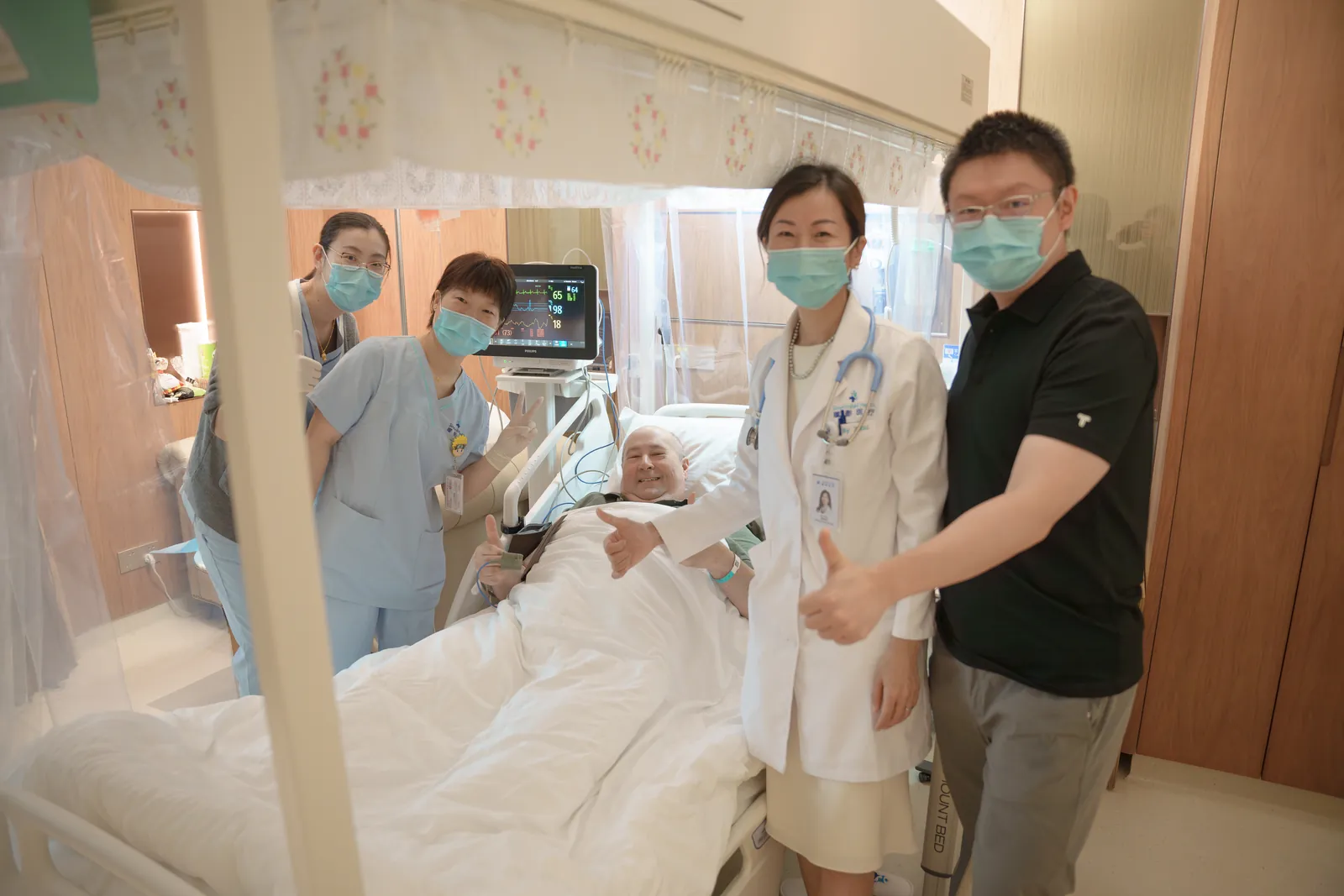
Your second trip is a full hospital stay. It runs from pre-infusion evaluation through infusion to a monitored recovery, and ends with discharge around Week 8 of the overall journey.
Pre-infusion evaluation. The team confirms you're ready for infusion.
Conditioning (lymphodepletion). A short course of chemotherapy prepares your body to receive the engineered cells.
Infusion. Your CAR-T cells are infused. The infusion itself is quick.
Monitored recovery. You stay under close inpatient monitoring for about two weeks as the therapy takes effect, before discharge.
CAR-T can cause side effects that need watching — most commonly cytokine release syndrome (CRS). This is why recovery is a supervised inpatient stay.
On-site intensive care is available at SinoUnited Health if it's ever needed during recovery. More on CAR-T safety and side effects
SinoUnited recommends returning for a review every three months. Between those, SinoUnited's physicians can coordinate your monitoring together with your own oncologist at home, so both teams stay involved.
International treatment brings logistics as well as medicine. A dedicated team helps with the parts around the care itself.
SinoUnited can issue one on request to support your medical visa application.
Each ward has a sofa bed so one family member can stay overnight, and the hospital is in the central Bund area with hotels at a range of prices close by.
Working in English and Chinese — for consultations, documents, and day-to-day help throughout your stay.
SinoUnited can prepare medical documentation and coordinate ambulance transfer within Shanghai.
Because assessment begins remotely, most patients know where they stand before traveling. If you do travel and an in-hospital assessment finds CAR-T isn't right for you, SinoUnited's physicians will recommend more suitable options for your condition — and the choice of whether to proceed or return home is yours.
SinoUnited's policy is that your deposit is fully refundable, less the cost of any tests already completed. See the full refund policy
Start a free remote assessment and find out whether CAR-T is an option before you plan any travel. You'll hear back within 24 hours.