
Diagnosed at 63 and told chemotherapy offered no cure, Alan chose Shanghai — for more years with his grandchildren. His account, in his own words.
 Alan
Alan
Alan had just retired, with four grown sons and plans to spend his time with family, when a sore throat turned into something else entirely.
In 2023 he was losing weight and had a sore throat. An ENT specialist wanted to operate on his tonsils, and sent him for clearance first. It was the hematologist who gave him the news: it was not an infection, and it was not his tonsils. The problem was in his blood. He was 63.
The diagnosis was mantle cell lymphoma, a rare blood cancer. He was told there was no cure, and that chemotherapy might give him around five years.
Six months of chemotherapy followed. He lost his hair and a great deal of weight, and describes that period as living at about half of a normal life — difficult to talk, difficult to eat, difficult to sleep, and a constant round of blood tests and scans. He had always thought of himself as a healthy man.
Targeted tablets brought him back to something like himself, but he was uneasy about staying on them indefinitely and what that might do to his liver and kidneys over time. He began reading about CAR T-cell therapy.
There was no CAR T-cell therapy available in the Philippines. He and his wife looked at the United States and at Europe, and neither was affordable. China was the option that remained.
“My wife and I didn’t spend too much time deciding. We decided to take it as our last hope for a cure.”— Alan
He was met at the airport by Li Hao from the team. It is the first thing he mentions when he describes the care, and it set his expectation for everything that followed.
Coming to China meant something particular to Alan. His father was Chinese, from Fujian, and he has a Chinese name of his own. He and his wife went to church often before they travelled and prayed — for healing, for the family, and for his ancestors, who came from here.
“It would really take care of you from the moment you arrive until the day you return.”— Alan
The medical process was smooth. He had no nausea. The fever afterwards he had expected, and it made the treatment feel real to him. On the days he had one he had no appetite and wanted only to sleep.
What he returns to is patience. He made a great many requests — food, pillows, something for a headache. At one point they asked a nurse to buy Tiger Balm so his wife could rub it into his head. She was the one caring for him throughout, massaging his head and back so he could sleep. The staff taught him some Chinese, and having known a little as a boy, it began to come back.
“Home away from home.”— Alan’s wife
Time. His only grandchild turns three in December, and the family have booked four days at Hong Kong Disneyland to celebrate. Two of his four sons are married; he would like to see the other two married, and to meet the grandchildren who come after.
He is clear-eyed about what the therapy is for. Technology moves quickly, he says, and even if this is not the whole answer, more will come. It buys time. When he lands back in Manila the family will be waiting, and on Sunday, as always, they will have dinner together after church.
Alan was treated for mantle cell lymphoma. Learn about CAR T-cell therapy for this condition.
Every patient’s journey is unique. The experiences described here are personal accounts and are not a prediction of results for anyone else.
A short eligibility check is the first step. It asks only for basic contact details and your diagnosis — your records are then reviewed by our hematology team.
 Emma
Emma
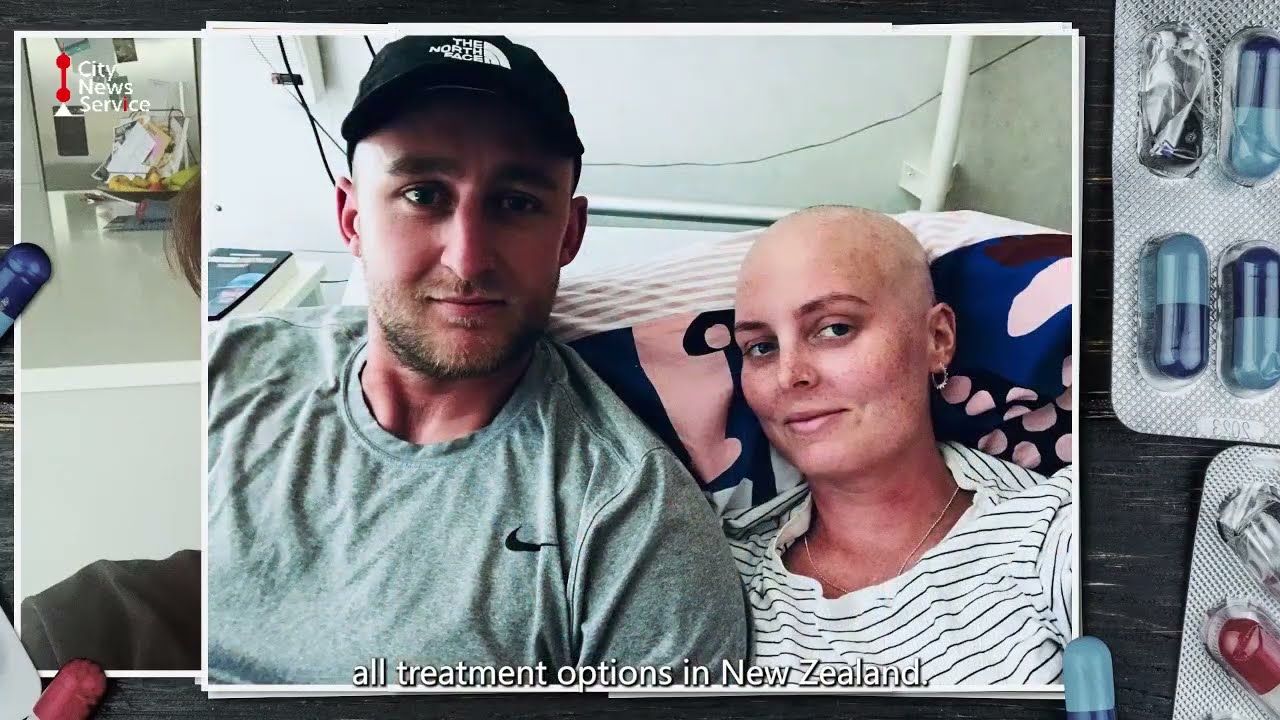
A chef from Gisborne who had run out of options at home, and the community that rallied to get her to Shanghai.
Read Emma’s story Irene
Irene
When her lymphoma relapsed less than a year after chemotherapy, Irene was on the ground in Shanghai within a week.
Read Irene’s story Dale
Dale
An Auckland construction manager whose lymphoma didn’t respond to chemotherapy, and the choice he faced.
Read Dale’s story