
An Auckland construction manager whose lymphoma didn’t respond to chemotherapy, and the choice he faced. His account, in his own words.
 Dale
Dale
There was no history of cancer in Dale’s family. He had never smoked, and had never really been ill. His first question, he says, was why me?
A construction manager from Auckland, Dale was 56 and about to retire from the business he owned. In July 2023 he was diagnosed with stage 4B lymphoma in the abdomen. Over the following twelve months he had three cycles of chemotherapy in New Zealand. None of them worked.
At the end of the third cycle he did not meet the criteria for a stem cell transplant, and there was no further treatment available to him in New Zealand. A New Zealand oncologist had raised CAR T-cell therapy early on, and it came up again each time a round of chemotherapy failed.
He was introduced to others on a similar journey, mostly around the Whakatane region, and they were all talking about Shanghai. Dale researched it while still having chemotherapy, then opened conversations with two hospitals in Shanghai and one in Australia, and asked all three for a video meeting. Two agreed. He met the Australian facility, and he met Dr. Lily Zhou.
“She was open and transparent. I felt like she had my health as the primary interest. I wasn’t going to be a number.”— Dale
When Dr. Zhou received his New Zealand results she came back quickly, and told him something he had not been told before: his lymphoma was not the standard type, and it was going to be tougher. She also told him he would need bridging treatment before CAR-T, to reduce the cancer burden the therapy would have to deal with.
Dale introduced Dr. Zhou to his New Zealand oncologist, and the two of them built a plan together — bridging treatment given partly in Shanghai and partly in New Zealand, coordinated between them. He says seeing that cooperation between his own doctor and the team here was what made him comfortable.
It took two trips and rather longer than anyone first thought. He flew to Shanghai about two weeks after the video meeting for cell collection, then stayed another two and a half weeks to start the bridging treatment. He went home to New Zealand for a fortnight, continued the bridging there, and came back for the infusion. Across three months he spent 43 nights in hospital.
He is enthusiastic about where the hospital sits. It is close to the main tourist area, and there are hotels five minutes’ walk away — which matters, he points out, because a wife or family member supporting you does not want to be in the hospital every hour of the day. When his own wife fell ill one night at her hotel, she took a taxi in, was admitted, and stayed two nights. It was nothing serious, but she knew where to go.
Between treatments he walked. A couple of kilometres in every direction, he reckons, and enough of the old architecture to have opinions about it — it reminds him of the old port end of downtown Auckland.
The infusion itself was straightforward. The side effects were not: they usually begin five to seven days afterwards and his started on day two, which was concerning at the time. He thinks the bridging treatment had reduced the cancer burden enough that the therapy got to work faster than usual. They lasted about ten days, some severe and some less so.
What he returns to is that he only had to say how he was feeling and the team responded. He is equally warm about the kitchen — cancer treatment changes what you can stand to eat from one day to the next, and he says nothing was ever a problem.
“If you want an ice cream from across the road, they’ll go and get an ice cream from across the road. Nothing is a problem.”— Dale
He is direct about how he saw it: he could do nothing and stay where he was, or he could come to Shanghai. He was scared — he says it is a scary prospect — but he had no doubts once he had chosen. Now in remission, he has plenty to live for, and he will be back in China in November to see the team.
First thing he is going to do? Go fishing.
Dale was treated for diffuse large B-cell lymphoma. Learn about CAR T-cell therapy for this condition.
Every patient’s journey is unique. The experiences described here are personal accounts and are not a prediction of results for anyone else.
A short eligibility check is the first step. It asks only for basic contact details and your diagnosis — your records are then reviewed by our hematology team.
 Emma
Emma
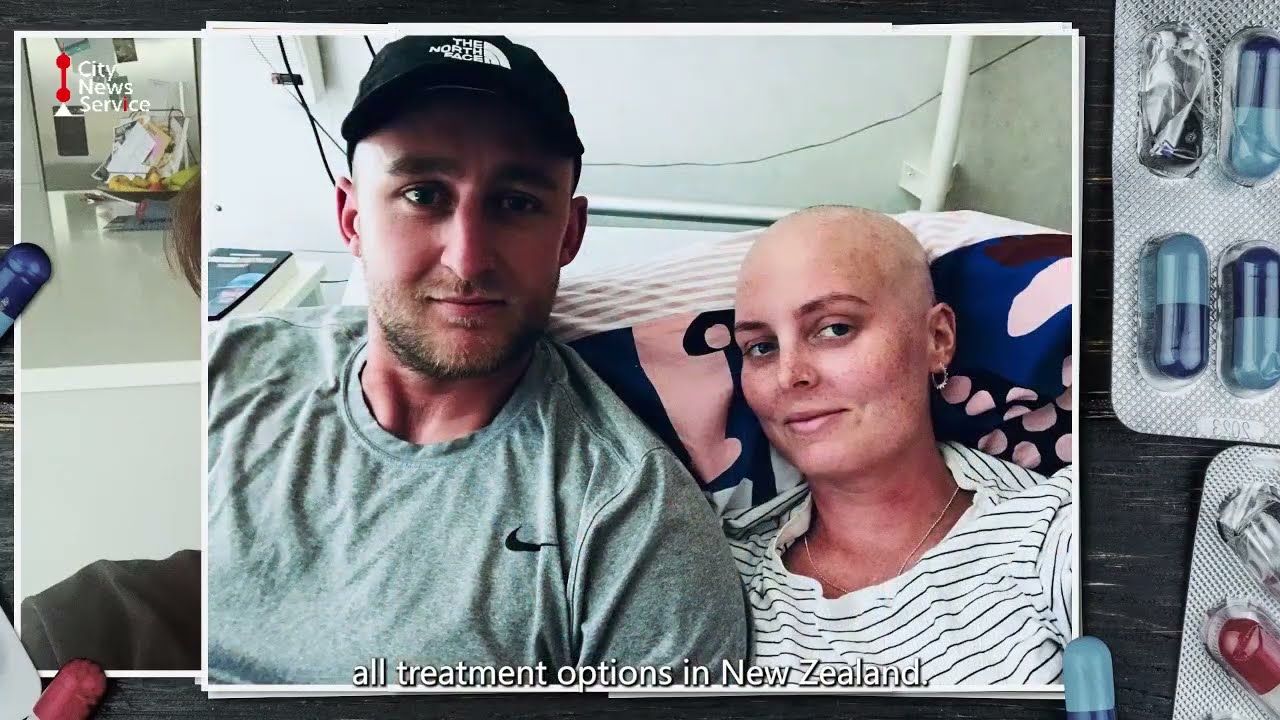
A chef from Gisborne who had run out of options at home, and the community that rallied to get her to Shanghai.
Read Emma’s story Irene
Irene
When her lymphoma relapsed less than a year after chemotherapy, Irene was on the ground in Shanghai within a week.
Read Irene’s story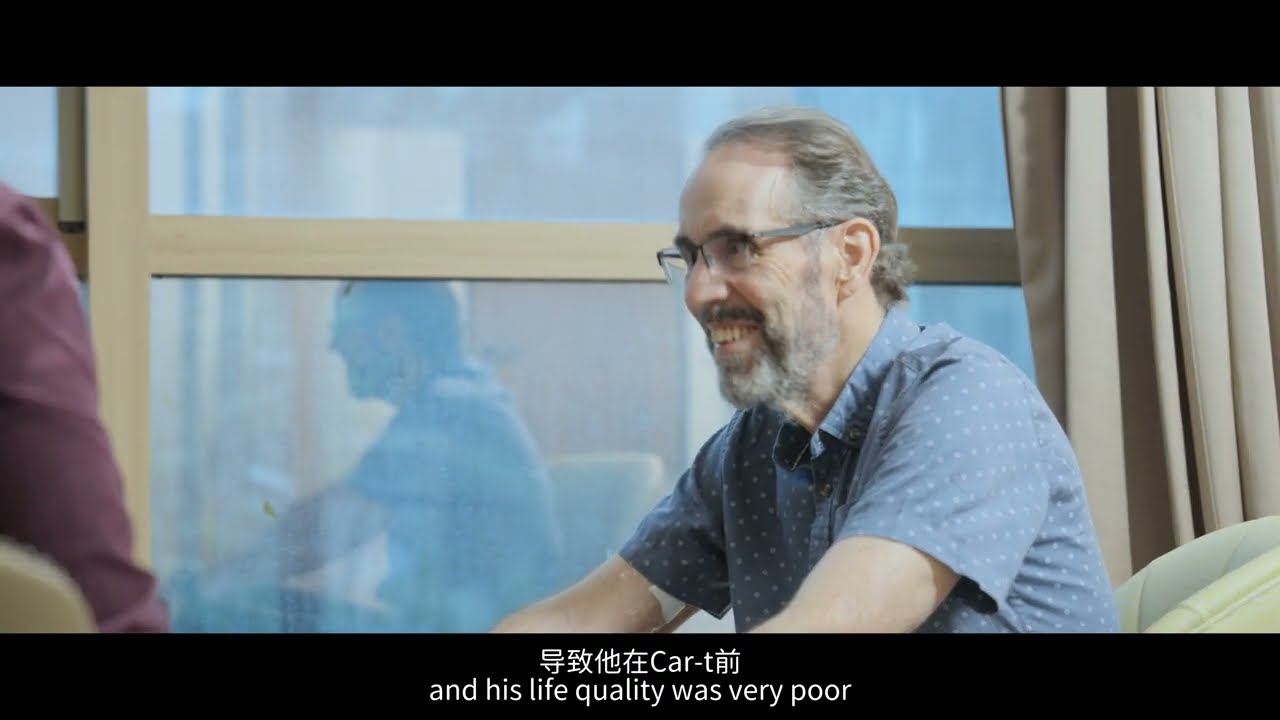 Tim
Tim
An author and lifelong cyclist with high-risk myeloma, who couldn’t access CAR-T at home.
Read Tim’s story