
A published author and lifelong cyclist with high-risk myeloma, who couldn’t access CAR-T at home. His account, in his own words.
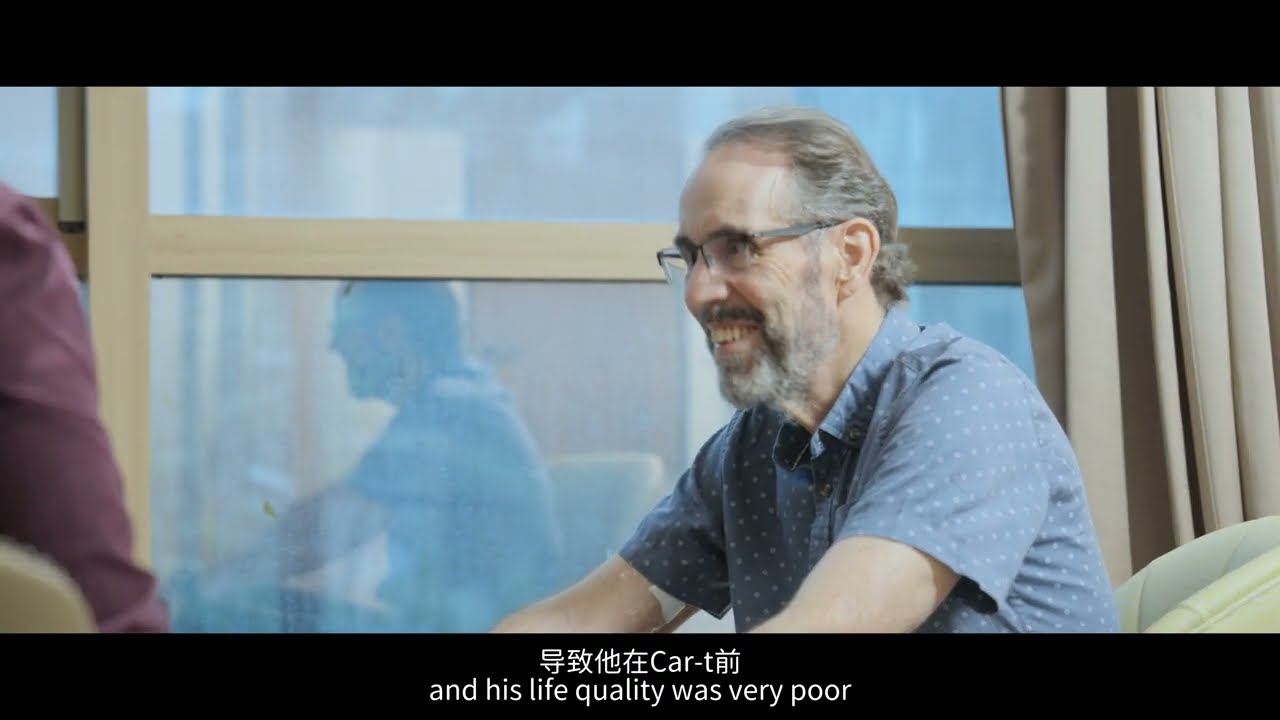 Tim
Tim
Tim is an actuary by training — a commercial mathematician — who has had twelve books published and, with his wife, cycled some 30,000 km through forty countries.
In 2015 an infection put him in hospital, and the investigations turned up early-stage prostate cancer. The same round of tests flagged something unrelated: raised immunoglobulin G. That became a diagnosis of MGUS — monoclonal gammopathy of undetermined significance — a finding that may develop into multiple myeloma and may not. Tim, a statistician, was struck by the phrase. Clearly it’s significant. They just don’t know exactly what is going to happen.
It stayed at the smouldering stage until 2021, when he began treatment, and he had a stem cell transplant that August. He describes it as brutal — something you do because you have to. His myeloma is high-risk: three genetic abnormalities. He is otherwise, at 72, in good health.
He had been reading about CAR T-cell therapy since before the transplant, and had decided it was his best hope. The obstacle was access. He raised it with his hematologist in New Zealand, who was interested but had no practical experience of it, because it was not available there.
There was a second obstacle, and it is one most people would not expect. At the point Tim started looking, he was not eligible for CAR T-cell therapy for myeloma in a number of other countries — because he had not been through enough previous lines of treatment.
“I didn’t want to wait until I was very sick. If I’m extremely unwell, a hospital may not even want to start treatment at that point.”— Tim
What settled the timing was a cough picked up on a cruise. Within two days of getting home he had a high fever and spent five nights in hospital. It turned out to be a common cold; his immune system simply could not handle it. He calls it a wake-up call.
Through a Facebook page he came across another myeloma patient in New Zealand who had heard about treatment in Shanghai, and who passed on Dr. Lily Zhou’s contact details. Tim looked into her background before making contact — her experience with myeloma, and the fact that she had worked internationally, both mattered to him.
The treatment took two trips. He was met at the airport both times, which he says made a journey he was making alone considerably easier. His wife stayed in New Zealand, and that was his decision rather than hers: he did not want to be worrying about her as well as himself, and Shanghai in summer would have meant her sitting in a hotel room. He called her every day.
The part he is most candid about is the money. Paying in advance meant transferring a significant sum internationally, to a country he had never been treated in.
“You think, I’m sending all this money to a Chinese bank account — how do I know everything is genuine? Even the bank asks you whether you’re sure it isn’t a scam.”— Tim
His background is in finance, so he researched it — the hospital, the team, other patients who had been. At some point, he says, you have to decide. Having now done it, he can tell the next New Zealander who asks exactly where he went and what he paid into.
The first trip was for cell collection: four or five hours beside a machine, blood out through one line and back through another. Then home while the cells went to the laboratory. Four weeks later he flew back, and had three days of chemotherapy before the infusion — queasy and a little tired, but next to nothing beside the stem cell transplant.
After the infusion, nothing happened for four days. A low-grade fever arrived on the Friday and a more noticeable one followed for a couple of days, leaving him tired. By day six it had gone and he was allowed outside in a mask, after sixteen days in a room. He spent most of the time writing his thirteenth book.
One thing he had not expected was what the monitoring turned up. His heart was watched continuously, and before the infusion it picked up an arrhythmia he had never known he had. The team arranged a cardiology assessment and a cardiac CT at short notice because he was due to fly. No pacemaker was needed; it will be watched over time.
He is careful to say he is not a hematologist and that every case is different. His own view was that he wanted the treatment while he was still well enough to handle it, rather than after several more lines of therapy had taken their toll.
At the time of the interview he did not yet know his result, and did not expect to — a fortnight is too early to say. He has since reached complete remission, and is doing well. He continues to send his results to Dr. Zhou, and wants the team to have the data, good or bad, because that is how medicine improves.
Next May he intends to cycle from Italy to Portugal with his wife.
“My hope is that there’ll be no detectable cancer and I’ll simply be a 72-year-old riding his bicycle through Europe. I’m looking forward to just being Tim.”— Tim
Tim was treated for multiple myeloma. Learn about CAR T-cell therapy for this condition.
Every patient’s journey is unique. The experiences described here are personal accounts and are not a prediction of results for anyone else.
A short eligibility check is the first step. It asks only for basic contact details and your diagnosis — your records are then reviewed by our hematology team.
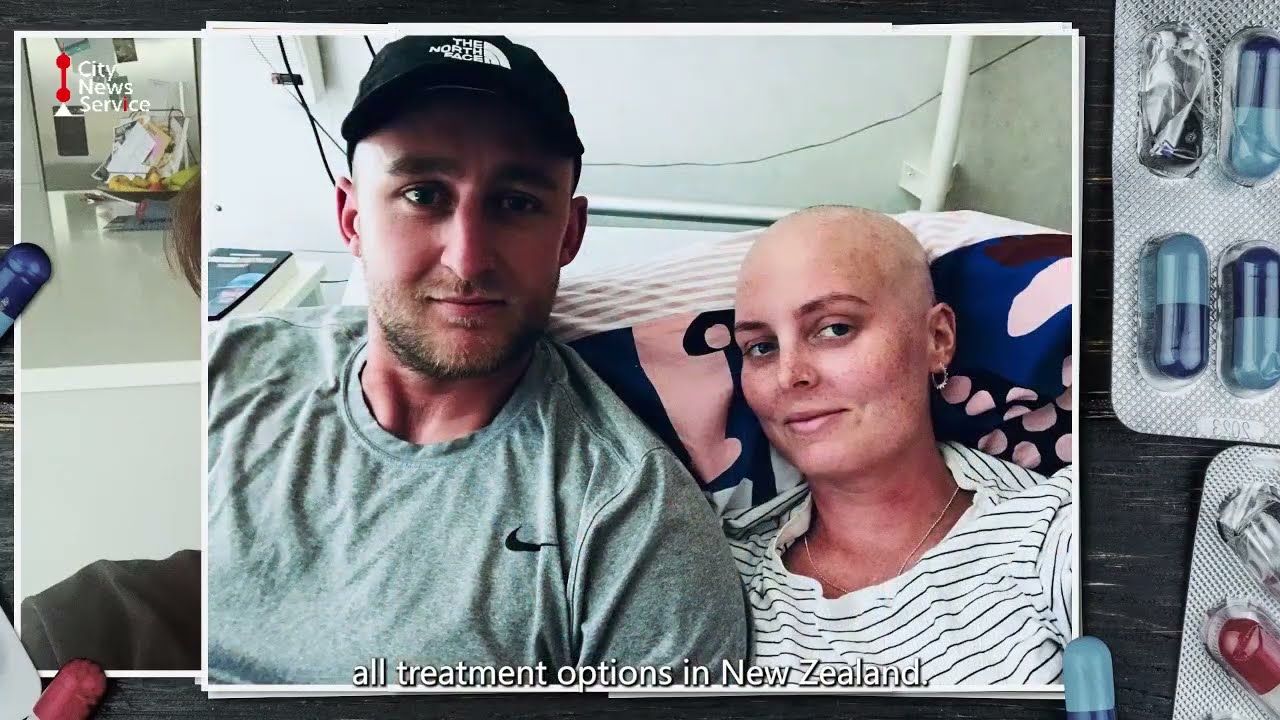 Emma
Emma
A chef from Gisborne who had run out of options at home, and the community that rallied to get her to Shanghai.
Read Emma’s story Irene
Irene
When her lymphoma relapsed less than a year after chemotherapy, Irene was on the ground in Shanghai within a week.
Read Irene’s story Dale
Dale
An Auckland construction manager whose lymphoma didn’t respond to chemotherapy, and the choice he faced.
Read Dale’s story